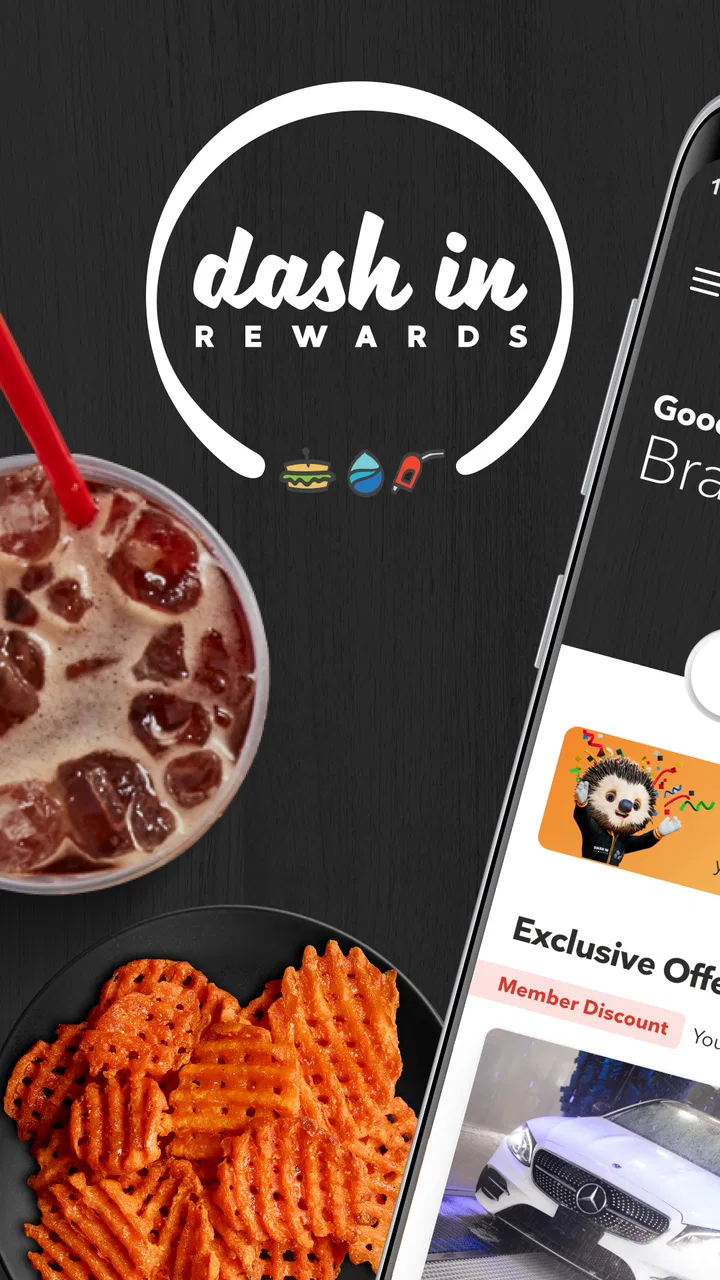
Dash In Rewards
- 4.1
- Rating
- 100.00K
- Installs
- Free
- Price

 Analysis by App-foxy
I tend to judge loyalty apps by a simple question: do they make a routine purchase easier, or do they turn a quick stop into another account to manage? Dash In Rewards is aimed at people who regularly visit Dash In and want to save on fuel, food, or a car wash. After spending time with it, I see it as a focused companion for those visits rather than a general-purpose shopping app.
That distinction matters. The app is free, rated for Everyone, and belongs to the Food & Drink category, but its usefulness depends heavily on whether Dash In is already part of your normal driving routine. If it is, the rewards angle can give an ordinary fuel stop a little more value. If you rarely visit, there is less reason to add another loyalty account to your phone.
What I looked for before recommending it
My first test was convenience. A rewards app should not make me think harder than the purchase itself. I wanted to know whether Dash In Rewards felt like something I could use during a rushed stop, whether its purpose was clear, and whether it suited more than one kind of customer. The central promise is saving on fuel, food, and car wash purchases, so I considered those as separate use cases rather than treating the app as one broad discount tool.
You May Also Like

 Blood Strike: 2.5 Anniversary
Blood Strike’s Loadouts Turn Every Drop Into a Tactical Gamble
A close look at Blood Strike’s custom loadouts: how fast access to signature weapons reshapes its battle royale rhythm, rewards preparation, and narrows the gap between fights.

 Pandora - Music & Podcasts
Pandora’s Music Is Easy to Start, but Harder to Recover
Pandora’s strength is its low-effort path from a seed to a station. Its weak spot is how much confidence it asks you to place in connection, setup, and quiet recovery.

 8 Ball Pool
 Is Built on Rivalries, Rematches, and Routine
A close look at the rivalries, rematches, shared routines, and unanswered safety questions that turn a quick pool match into a persistent mobile community.

 Samsung Music
’s Quiet Strength Is Playing What You Already Own
Its reach comes less from spectacle than from dependable access to a personal library. That simplicity is both the app’s strongest retention engine and its ceiling.

 AccuWeather: Weather Radar
AccuWeather Review: A Quick, Clear Forecast for Everyday Decisions
For everyday plans, the best forecast is the one you can understand quickly. AccuWeather makes rain timing, radar, and local conditions easy to act on, with a few trade-offs.

 Hill Climb Racing
Why Hill Climb Racing Still Turns Crashes Into One More Run
A tiny car, a bumpy hill and one more upgrade: Hill Climb Racing keeps resurfacing because its simple chaos makes every near-miss feel personal.
More From Our News Desk
View All News


The second test was commitment. Loyalty programs often sound attractive until the user has to remember several conditions, open the app at the right moment, or change an established payment habit. Even when an app is free, there is still a cost in attention. I think that is the most important trade-off here: the benefit comes from making the app part of a repeated routine, not from installing it once and forgetting about it.
I also considered how it compares with the usual alternatives. A physical loyalty card is familiar but easy to leave at home. A bank card or payment wallet is faster for a one-off purchase, but it is not necessarily designed around Dash In rewards. A general coupon app may offer wider coverage, but it can be less useful when I already know exactly where I am stopping. Dash In Rewards sits between those options: narrower than a broad savings app, but potentially more relevant at a Dash In location.
The app is developed by Wills Group Loyalty Google Play Account. Its current version is 3.0.0, and it requires Android 7.0 or later. That makes it accessible to many Android users, including people who keep a phone for several years rather than upgrading frequently. The service has passed the early-install stage with over 50 thousand installs, while its average rating is 4.7 from around 500 ratings. I treat those numbers as encouraging, but I still prefer to judge a loyalty app by the quality of its everyday workflow.
The best fit is a repeat Dash In customer
The strongest case for installing Dash In Rewards is repetition. If I pass a Dash In on the way to work, use one during regular errands, or frequently combine fuel with a snack or car wash, the app has a natural place in my routine. I do not need to invent extra shopping trips to justify it. I can simply use it when I am already making a purchase.
That is a more convincing reason to join than downloading it because a single promotion looks appealing. Loyalty tools work best when the underlying behavior already exists. In this case, the app is most likely to earn its place on my phone when Dash In is a familiar stop and the rewards cover purchases I would make anyway.
It also makes sense for drivers who want one Dash In-focused place to check their participation instead of relying on memory. The practical advantage is not necessarily dramatic savings on one visit. For me, the value is the possibility of making repeated fuel, food, and car wash spending count within the same brand’s rewards system.
A realistic morning use case
Imagine leaving home with a low fuel level and only a few minutes before work. I stop at Dash In, fill up, grab a drink, and leave. Without a dedicated rewards routine, I might pay and drive away without thinking about the purchase again. With Dash In Rewards installed, I can make the stop part of a repeatable process: open the app when appropriate, use the available reward flow, and keep the account connected to the visits I already make.
The important detail is preparation. I would not wait until I am standing at the register with traffic behind me to learn how the app works. I would sign in before the first busy visit, explore the main screens at home, and make sure I understand how the app is meant to be used at checkout. That small step reduces the biggest source of friction in most loyalty programs: trying to solve setup and redemption at the same time.
For someone who buys only fuel, the app may still be worthwhile if visits are frequent. For someone who also buys food or uses a car wash at Dash In, the broader range of purchase types gives the app more chances to become useful. I would think of those categories as separate reasons to keep using it rather than assuming every user will benefit equally from all of them.
Where it wins over ordinary payment habits
The clearest strength is focus. Dash In Rewards is not trying to be a universal coupon marketplace or a general budgeting tool. Its purpose is tied to Dash In, which can make it easier to understand than an app filled with unrelated offers. When I know where I am shopping, a focused loyalty app can be more practical than searching through broad discount services.
It also brings fuel, food, and car wash spending into one Dash In-oriented experience. That combination is useful because a convenience-store visit is rarely limited to one category. A driver may refuel, buy something to eat, and decide to wash the car on the same day. A program that recognizes the wider stop can feel more relevant than a solution built around only one item.
Another advantage is the lack of an entry price. Since the app is free, the decision is mainly about usefulness and effort rather than an upfront purchase. I still would not install it automatically, because free apps can consume time and attention, but the absence of a price makes it reasonable to try when Dash In is already part of my route.
The high average rating also gives me some confidence that many users find the experience satisfactory. I would not treat a rating as proof that every phone, location, or shopping habit will produce the same result. Still, combined with the app’s growing install base, it suggests that Dash In Rewards is not an obscure experiment with no visible user adoption.
Small habits that make the app more useful
My first practical tip is to install it before a planned stop, not during one. Use a calm moment to complete the initial setup and understand where the relevant reward information appears. This is especially helpful if you are driving with children, commuting on a schedule, or stopping in bad weather, when standing still to troubleshoot a phone is unpleasant.
Second, I would create a simple personal rule for using it. For example, I might check Dash In Rewards whenever I know I am buying more than fuel, or whenever I am making a regular weekly stop. A rule is easier to remember than trying to decide from scratch every time. It also prevents the app from becoming a background installation that never affects my purchases.
Third, I would review the app before combining several purchases. If I am buying fuel, food, and a car wash in one visit, I would take a moment beforehand to understand how I should handle the transaction. The non-obvious benefit of this approach is that it separates planning from checkout. Even a well-designed rewards app feels inconvenient when the user is discovering its process while holding up the line.
Finally, I would keep expectations realistic. The app can help organize rewards around Dash In purchases, but it does not replace comparing the total cost of a trip, choosing a convenient location, or deciding whether a car wash is actually needed. A reward should support a purchase I already want, not pressure me into spending more simply because the app is present.
Where another type of app may fit better
Dash In Rewards is not the right choice for everyone. If I visit many different fuel stations and convenience stores, a brand-specific program may be less useful than a payment card or broader savings service that works across more places. In that situation, flexibility can matter more than having a focused relationship with one retailer.
It may also be a poor fit for someone who makes very occasional Dash In stops. The app is designed around repeat behavior, so an infrequent visitor may not want the setup, reminders, or account maintenance involved in another loyalty program. Paying with the usual method could be simpler when the visits are too rare to become a habit.
People who want detailed household budgeting should look elsewhere as well. A fuel-and-food rewards app addresses savings at the point of purchase; it is not the same thing as a full expense tracker. I would use a budgeting tool if my main goal were to categorize driving costs, monitor monthly spending, or compare household totals.
There is also a difference between a loyalty app and a digital wallet. A wallet is primarily about payment convenience, while Dash In Rewards is about the relationship between a Dash In purchase and the rewards experience. If I care most about tapping to pay quickly and keeping several cards in one place, a wallet may remain the more important app. I would use Dash In Rewards alongside that kind of tool only if the rewards process fits comfortably into the purchase.
The real cost of switching from your current routine
Switching from a physical card or no loyalty program is not difficult in theory, but it does involve a few mental adjustments. I have to remember that the app exists, keep my phone available, and learn when to use it. Those steps are minor for frequent customers, yet they can feel unnecessary for someone who wants every stop to be as fast as possible.
The easiest transition is to treat the first few visits as practice. I would not judge the app after one rushed attempt. Instead, I would use it during a quieter stop, note what I need to do before paying, and then repeat the same sequence. Once the process becomes automatic, the attention cost should fall. If it still feels slower than the value I receive, that is a clear sign that the program is not a good personal fit.
I would also avoid changing every payment habit at once. Keep the usual way of paying and add the rewards step only when you understand it. This makes it easier to identify whether a problem comes from the account, the checkout process, or simple unfamiliarity. A gradual approach is less frustrating than trying to replace a familiar routine in one visit.
For families or shared vehicles, the decision becomes more personal. If several people make Dash In purchases but only one person manages the rewards account, that arrangement may be convenient or may create confusion, depending on how the household already handles loyalty programs. I would decide in advance who is responsible for using the app and checking its progress. That avoids the common problem of everyone assuming someone else captured the purchase.
My recommendation for different drivers
I recommend Dash In Rewards to regular Dash In customers who want a free way to connect fuel, food, and car wash visits with a brand-specific rewards routine. The case is strongest when Dash In is already on the route and the user is willing to spend a few minutes learning the process before the first busy stop.
I would recommend trying it cautiously for occasional visitors. Because it is free, the trial does not require a purchase, but the app should earn its place by making later visits more worthwhile or more organized. If it remains unused after a few trips, there is no practical reason to keep building a routine around it.
I would skip it if my priority were a universal savings solution, a full payment wallet, or detailed expense management. Those needs point toward different categories of tools. Dash In Rewards is at its best when the question is specifically, “How can I make my regular Dash In stops work better for me?”
Overall, I see it as a sensible, focused Food & Drink app rather than an essential download for every driver. Its value comes from repeated, ordinary use—not from a single impressive-looking offer. The free price, Everyone age rating, Android 7.0 compatibility, and current 3.0.0 release make it approachable for many Android users, while its 4.7 average and over 50 thousand installs show solid interest. My final advice is simple: if Dash In is already part of your weekly driving pattern, Dash In Rewards is worth testing and building into your routine. If it is not, your usual payment method may be the more honest choice.
For me, that is the right standard for this app. It does not need to replace every other savings or payment tool. It only needs to make familiar Dash In purchases feel a little more deliberate without adding more hassle than the rewards are worth. For the right driver, that is a useful improvement; for everyone else, the narrow focus is exactly why another option may be better.
FAQs for Dash In Rewards
01What is Dash In Rewards?
Dash In Rewards is a loyalty program offered by the Dash In app, designed to provide users with exclusive discounts, rewards, and special promotions. By using the app, customers can earn points with every purchase, which can then be redeemed for various rewards such as free items or discounts on future purchases.
02How do I earn points with Dash In Rewards?
To earn points, simply make purchases at participating Dash In locations and scan your app barcode at checkout. Points accumulate based on the amount spent, and special promotions may offer bonus points for specific items or during certain times. Regular use of the app ensures steady point accumulation.
03Can I use Dash In Rewards across multiple locations?
Yes, Dash In Rewards can be used at all participating Dash In locations. The app is designed to track your purchases and points regardless of where you shop, making it convenient for users who frequent different stores. Always check the app for a list of participating locations.
04What types of rewards can I redeem with my points?
Rewards include discounts on future purchases, free items, and exclusive member-only offers. The app regularly updates its rewards catalog, ensuring that there are always new and exciting options available. Users can browse and redeem rewards directly through the app's interface.
05Is there a cost to join Dash In Rewards?
No, joining Dash In Rewards is completely free. Users simply need to download the app and create an account to start earning points and accessing rewards. There are no hidden fees or charges associated with maintaining your membership in the rewards program.
Pros
- User-friendly interface enhances navigation.
- Offers a wide range of reward options.
- Frequent updates with new features.
- Quick and easy sign-up process.
- Seamless integration with payment methods.
Cons
- Limited availability in certain regions.
- Occasional glitches in reward redemption.
- Notifications can be overwhelming.
- Requires constant internet connection.
- Some offers have short expiration dates.

Dash In Rewards
Gallery